Last updated: August 2026
A garage conversion ADU turns an existing garage into a fully permitted, independent living unit, and in California it typically costs $75,000 to $180,000 for a full conversion with a kitchen and bathroom. Because the structure, foundation, and roof already exist, converting a garage is often the most affordable path to an accessory dwelling unit. It works especially well on Bay Area lots where space is tight and building new from the ground up is expensive. The trade-off is losing covered parking.
For homeowners who want rental income, a guest suite, or a home for family without a full new build, a garage conversion is one of the most practical options available. Understanding the cost, rules, and limits helps you decide whether it fits your property.
What is a garage conversion ADU?
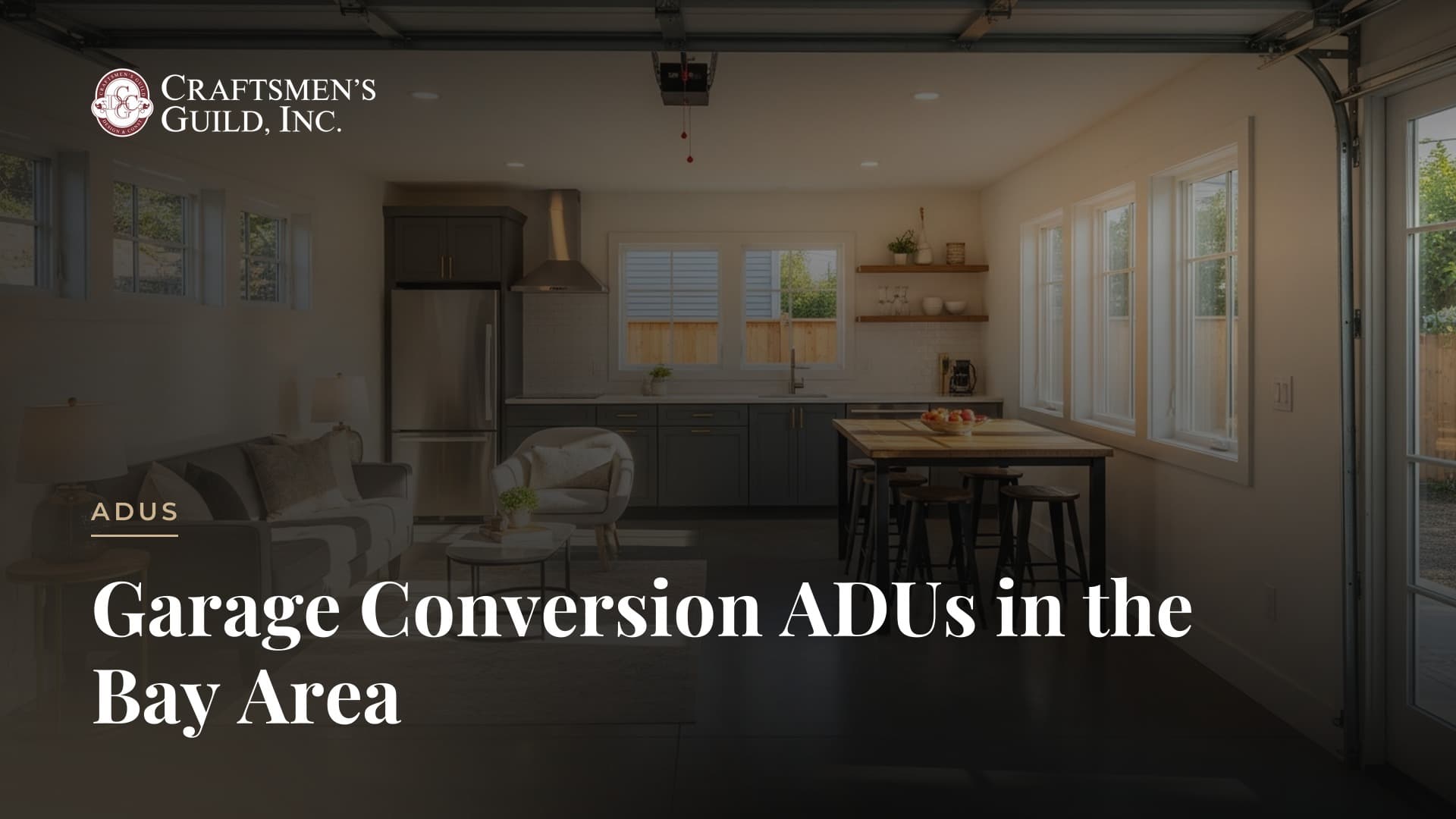
A garage conversion ADU is an accessory dwelling unit created inside an existing garage, complete with its own kitchen, bathroom, and entrance. State law now measures ADU size by interior livable space and treats conversions favorably under streamlined statewide standards [Source: California HCD 2026]. The result is a legal second home on your lot, not just a finished room.
Conversions can be attached, when the garage adjoins the house, or detached, when it is a standalone structure. Both must meet building codes for a habitable dwelling, including insulation, egress, and ventilation. Our guide to California ADU laws in 2026 covers the rules that apply.
How much does a garage conversion ADU cost in the Bay Area?
A full garage conversion ADU in California generally costs $75,000 to $180,000 or more, and a two-car garage conversion often runs $100,000 to $175,000, with Bay Area projects trending 25 to 50 percent above statewide averages [Source: Golden State ADUs 2025]. On a per-square-foot basis, conversions commonly land in the $125 to $300 range, below new detached construction.
The savings come from reusing the existing foundation, walls, and roof. Costs rise when the garage needs new plumbing, electrical upgrades, or foundation work to meet code. Compare these figures with new-build numbers in our ADU cost in the Bay Area guide.
Is a garage conversion cheaper than a new ADU?
Usually yes, because a detached ADU built from scratch runs about $300 to $400 per square foot in the Bay Area, while a garage conversion reuses existing structure and often costs less per foot [Source: Golden State ADUs 2025]. For budget-conscious homeowners, that difference can be decisive.
The savings are not guaranteed, though. An older garage with a substandard foundation or slab can require enough upgrades to narrow the gap with new construction. A design-build team assesses the existing structure before promising savings, as we explain in our overview of ADU services.
Layout is the other factor that decides whether the savings hold. A garage that already sits near existing water and sewer lines is far cheaper to convert than one at the far corner of a lot, because running new utilities across a property adds real cost. Ceiling height, slab condition, and window placement also influence how comfortable and code-compliant the finished unit will be. A careful assessment of these details up front produces a budget you can trust.
Does a garage conversion ADU add value?
Yes. A permitted ADU can raise a California home's value by roughly 20 to 35 percent, and the National Association of Realtors has estimated a national increase near 35 percent [Source: NAR / RenoFi 2025]. A legal, appraisable conversion delivers much of that upside at a lower cost than a new unit.
Value depends on the conversion being fully permitted and finished to a livable standard, since an unpermitted conversion can complicate a future sale. Demand supports the investment: ADUs made up nearly 28 percent of approved Bay Area homes in 2024 [Source: Planetizen 2026]. Quality and legality protect the return.
What are the downsides of converting a garage?
The main trade-off is losing covered parking, which can matter for resale in some neighborhoods and may run up against local parking preferences. California has reduced parking mandates for many ADUs near transit, but the loss of a garage is still a real consideration [Source: California HCD 2026]. Weigh it against the value the unit adds.
Older garages can also hide problems, from inadequate foundations to poor drainage, that add cost once discovered. A thorough assessment before design prevents surprises. Our article on home additions in the Bay Area compares conversions with other ways to add space.
What building code upgrades does a garage conversion need?
Turning a garage into a habitable ADU triggers code requirements a garage never had to meet, including insulation, heating, natural light, ventilation, egress windows, and often a raised or upgraded floor. State law treats conversions favorably but still requires the finished unit to be a code-compliant dwelling [Source: California HCD 2026]. These upgrades are what separate a legal ADU from an unpermitted room.
Common work includes adding a moisture barrier over the slab, upgrading electrical service, installing plumbing for a kitchen and bathroom, and replacing the garage door opening with a proper wall and windows. Older structures sometimes need foundation or drainage improvements as well, and a slab that was never poured for living space may require leveling or a new moisture barrier before finished floors go down. None of this is a reason to avoid a conversion; it is simply the work that makes the unit legal, durable, and comfortable. A design-build team scopes these items honestly up front, drawing on the same permitting discipline described in our Bay Area permits explainer, our services overview, and completed projects.
How Craftsmen's Guild handles garage conversions
Craftsmen's Guild is a family-owned design-build firm founded by the Amini Brothers in 1988, with three generations and more than 35 years of Bay Area experience. Our architects, designers, and builders work under one roof, so we can assess your garage, design the unit, and manage permitting and construction as one accountable team.
That integration matters on conversions, where the condition of the existing structure drives both feasibility and cost. We evaluate the foundation and systems honestly before we promise savings, then build a conversion that is legal, comfortable, and appraisable. Explore our ADU services and remodeling work, learn about our family, and start on the contact page.
Frequently asked questions
Do I need a permit to convert my garage into an ADU?
Yes. A legal ADU requires permits and must meet building codes for a habitable dwelling, including insulation, egress, and ventilation. An unpermitted conversion can create problems at resale and with insurance. Permitting is a core part of any legitimate conversion.
Can I convert a detached garage into an ADU?
Yes. Both attached and detached garages can be converted, and detached garages often make excellent standalone ADUs with good privacy. The existing structure must be brought up to code for habitable use. A feasibility review confirms what your specific garage needs.
Will I lose my parking?
Converting a garage typically means losing covered parking, though California has eased parking replacement requirements for many ADUs, especially near transit. Whether that matters depends on your neighborhood and street parking. It is worth weighing against the value and income the unit provides.
How long does a garage conversion take?
Plan for several months from design through permitting and construction, shorter than a new detached build but still a real project. Older garages that need structural upgrades take longer. A clear schedule at the start keeps the timeline predictable.
Deciding if a garage conversion is right for you
A garage conversion ADU is often the most cost-effective way to add a legal, income-ready unit to a Bay Area property, provided the existing structure is sound. The homeowners who benefit most are the ones who assess the garage honestly and weigh the parking trade-off before they start. When the structure is sound and the layout is right, few projects deliver as much usable, income-ready space for the money. To find out whether your garage is a good candidate, book a complimentary consultation.